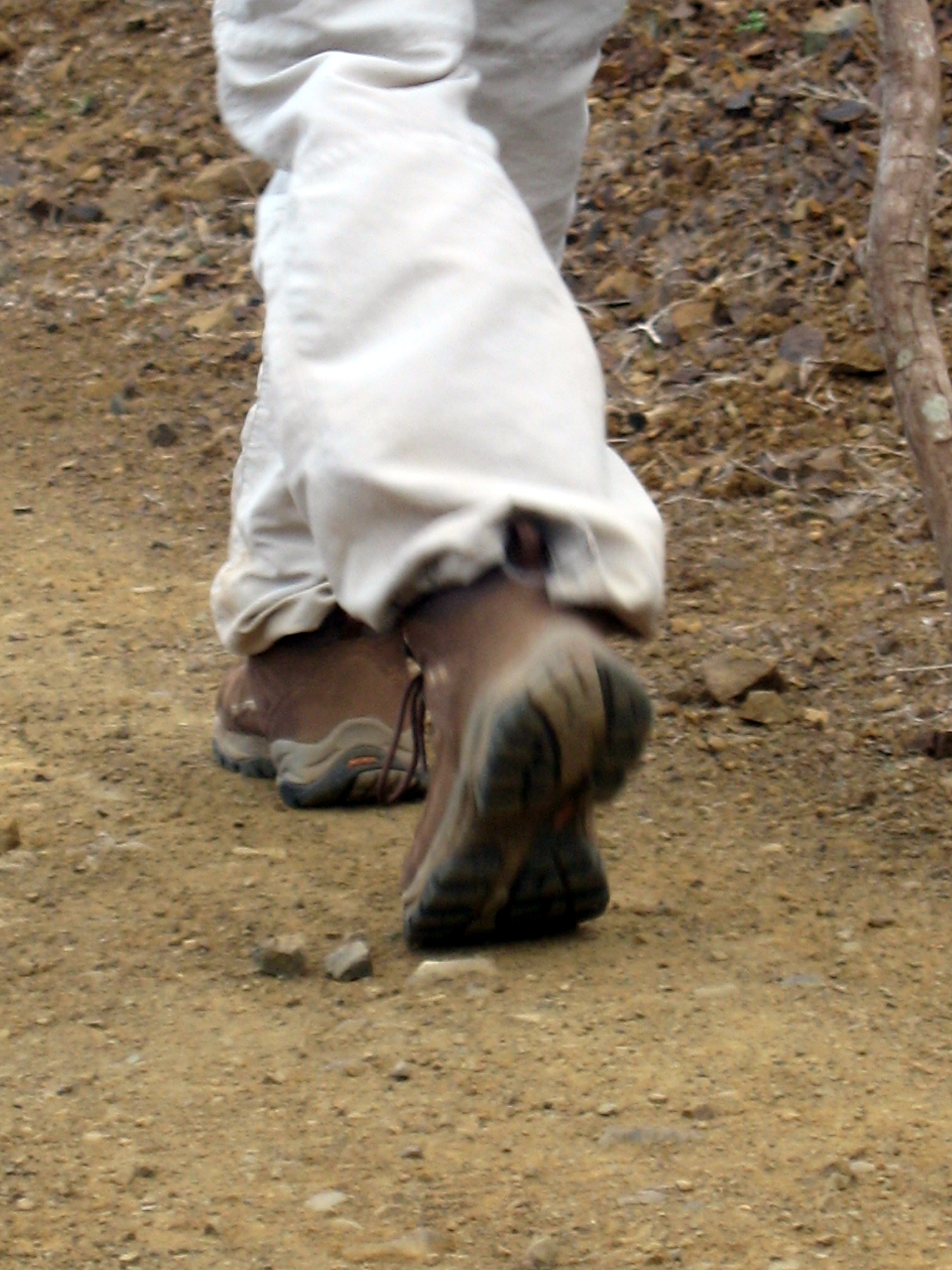
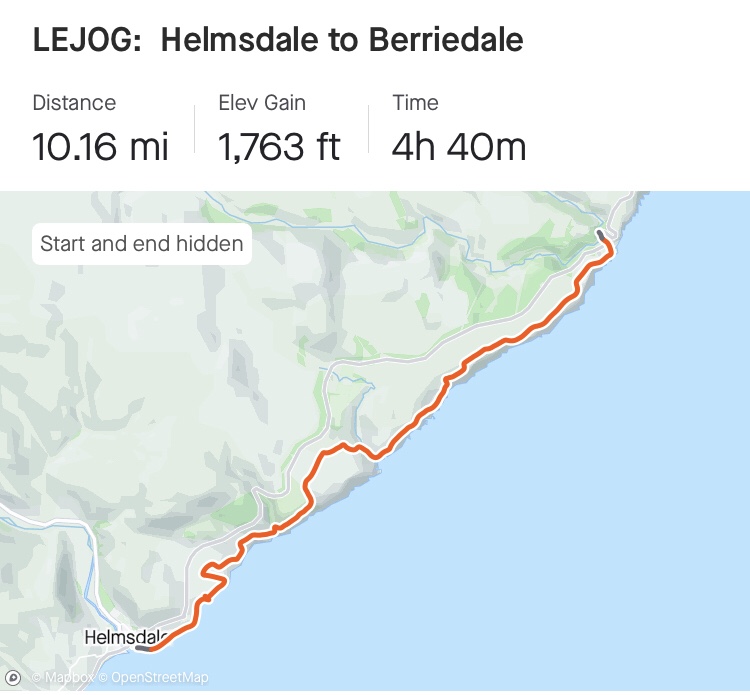
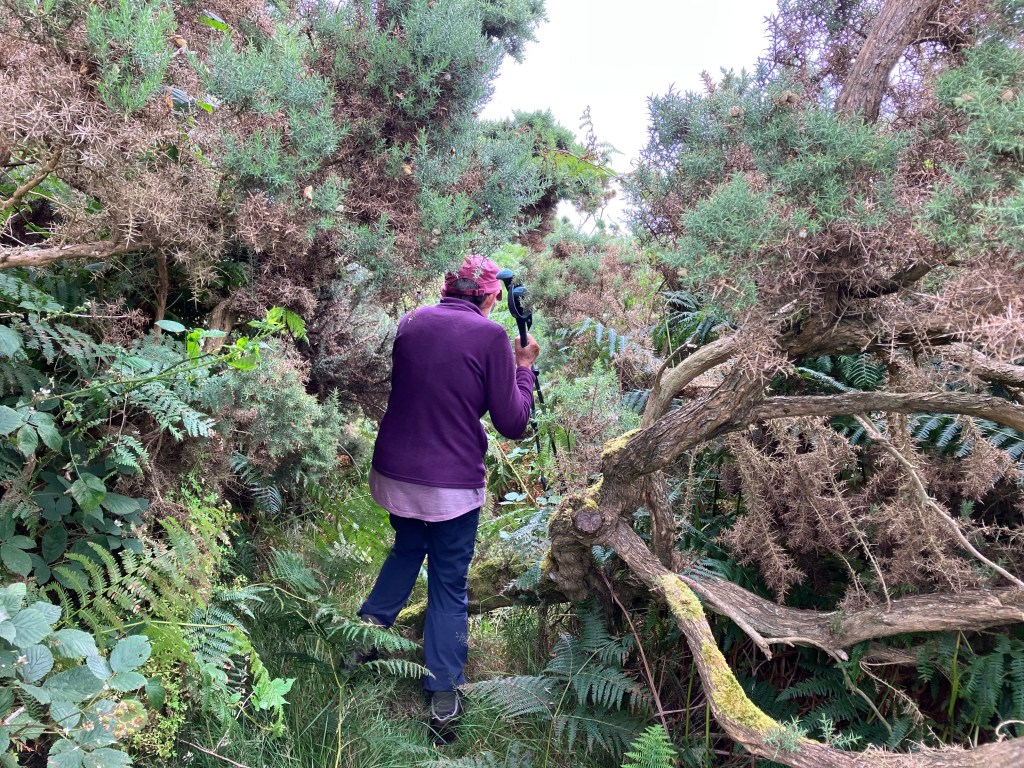
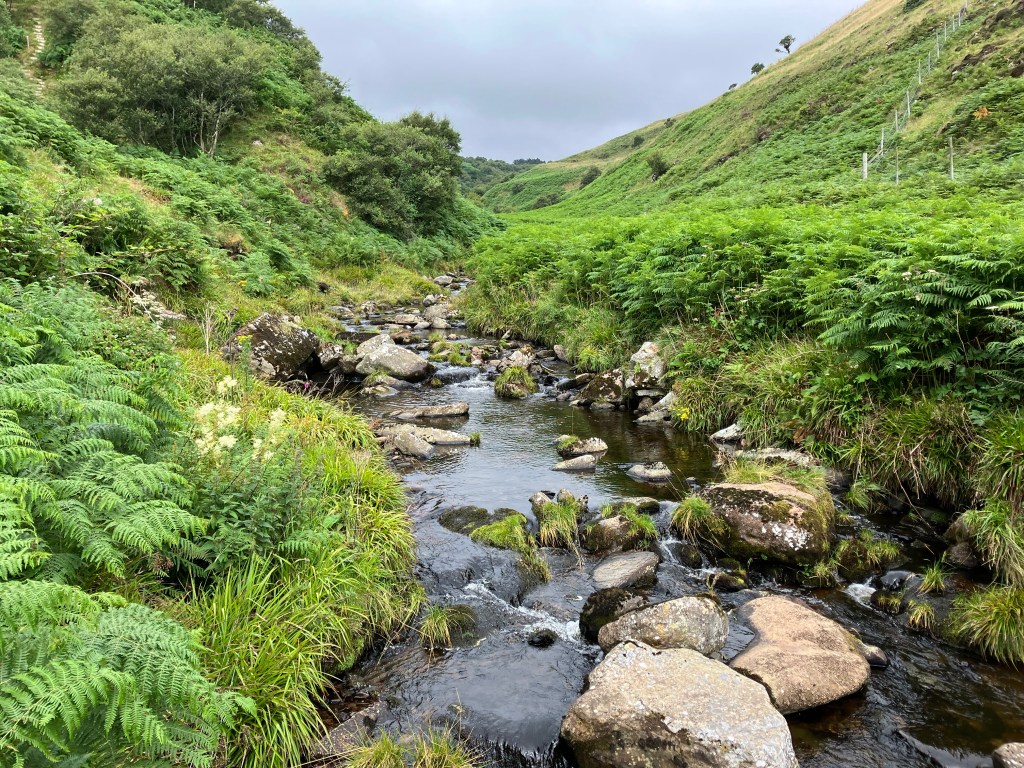
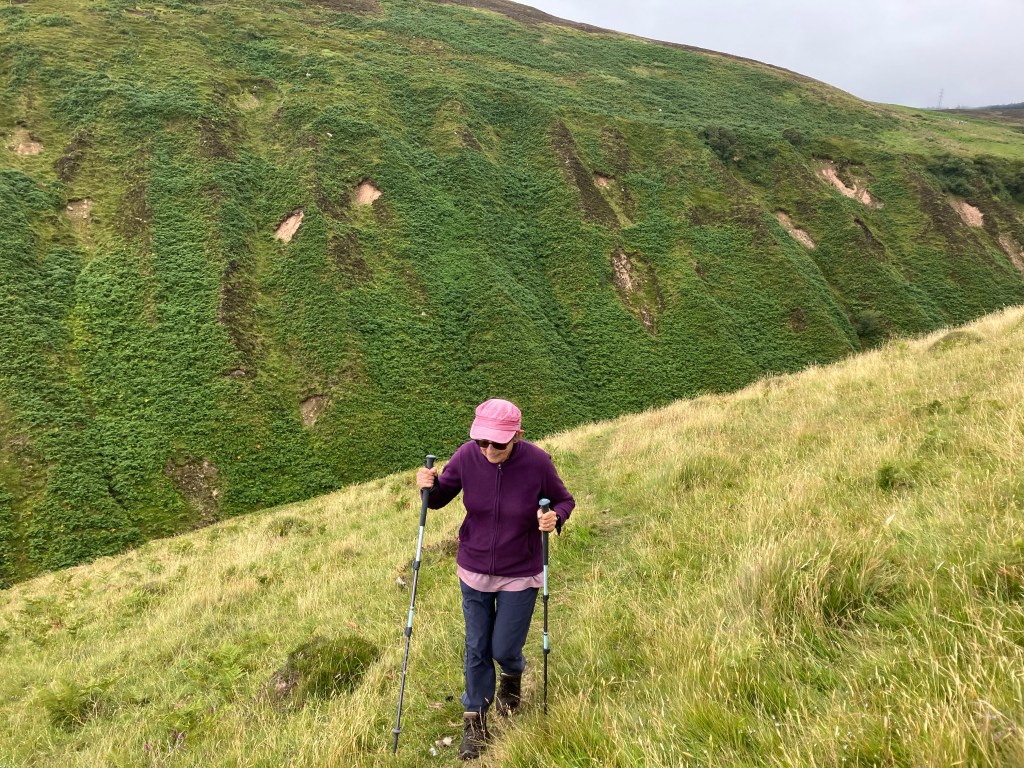
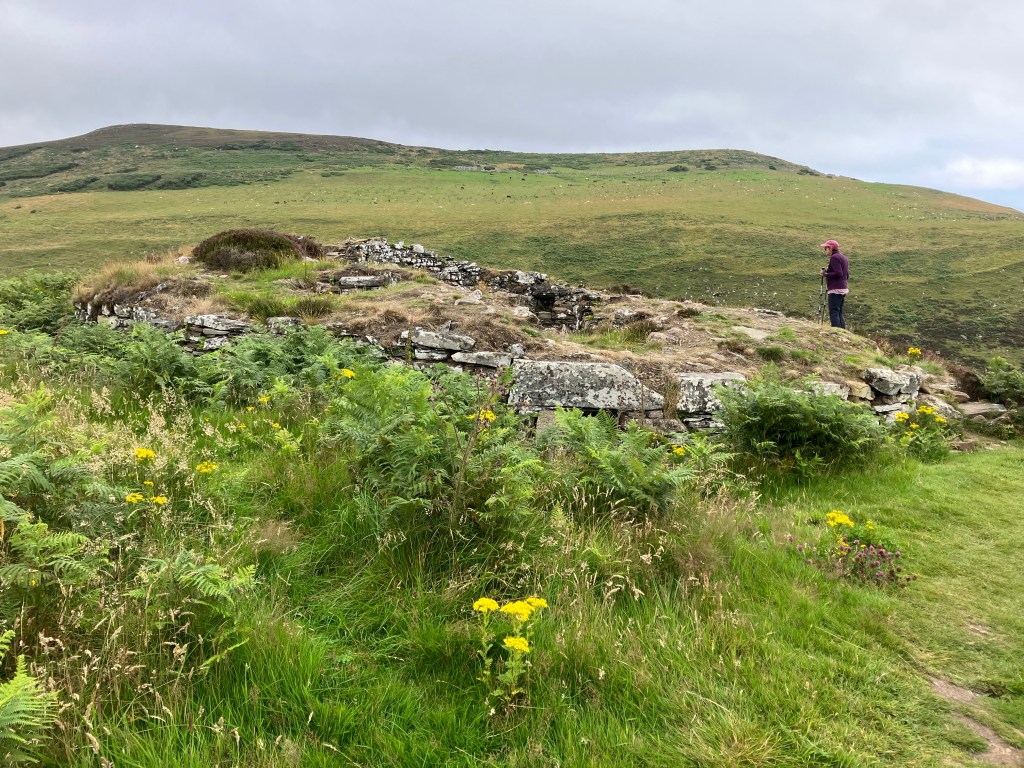
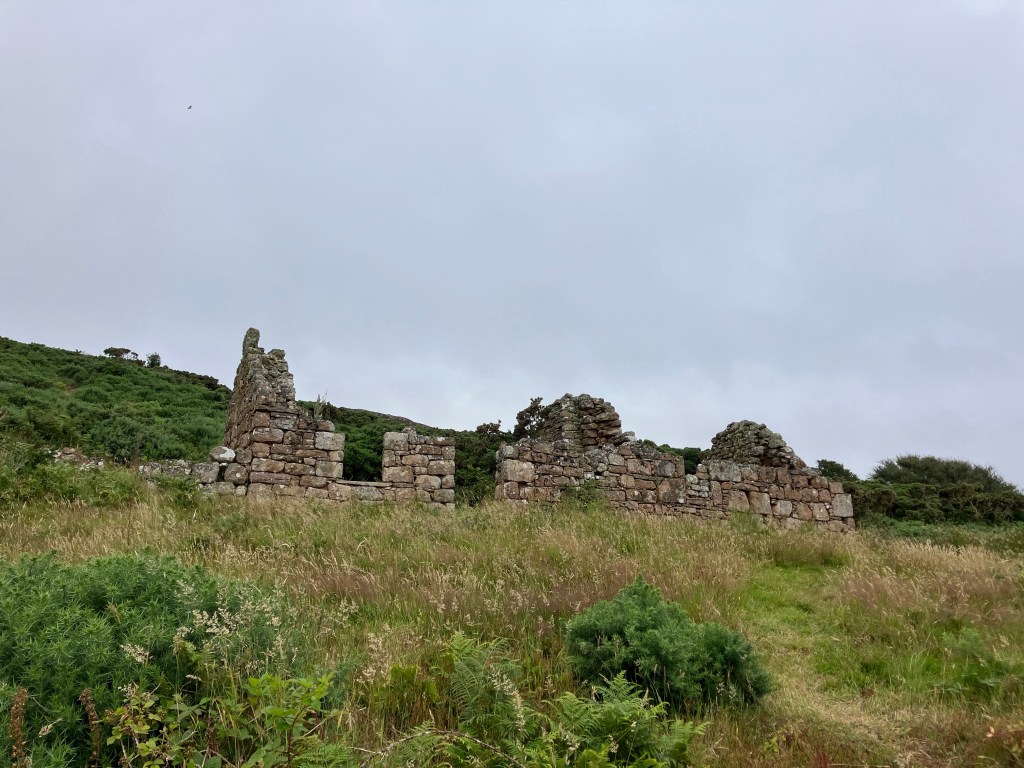
The John o’Groats Trail is a relatively new long distance path and, unlike the SW Coastal Path, is not maintained or as well signposted. Today’s walk involved hills once again, climbing up and then descending into ravines and crossing burns. Often the paths were overgrown and we struggled to fight our way through bracken. We also crossed heather-clad moorland with areas of bog – and a sense of deja-vu! However, views were spectacular and we enjoyed good walking weather. We passed the ruins of the village of Badbea, a clearance village, where those evicted from their crofts were resettled. We also saw older ruins, of ‘Brochs’, which are relics from Iron Age settlements! We arrived in Berriedale, and stopped for tea and cake whilst awaiting Rob, the bartender at the pub we are staying at, to drive us back to Helmsdale. He will deliver us back to Berriedale tomorrow morning to continue our walk to Dunbeath.
A Backward Glance
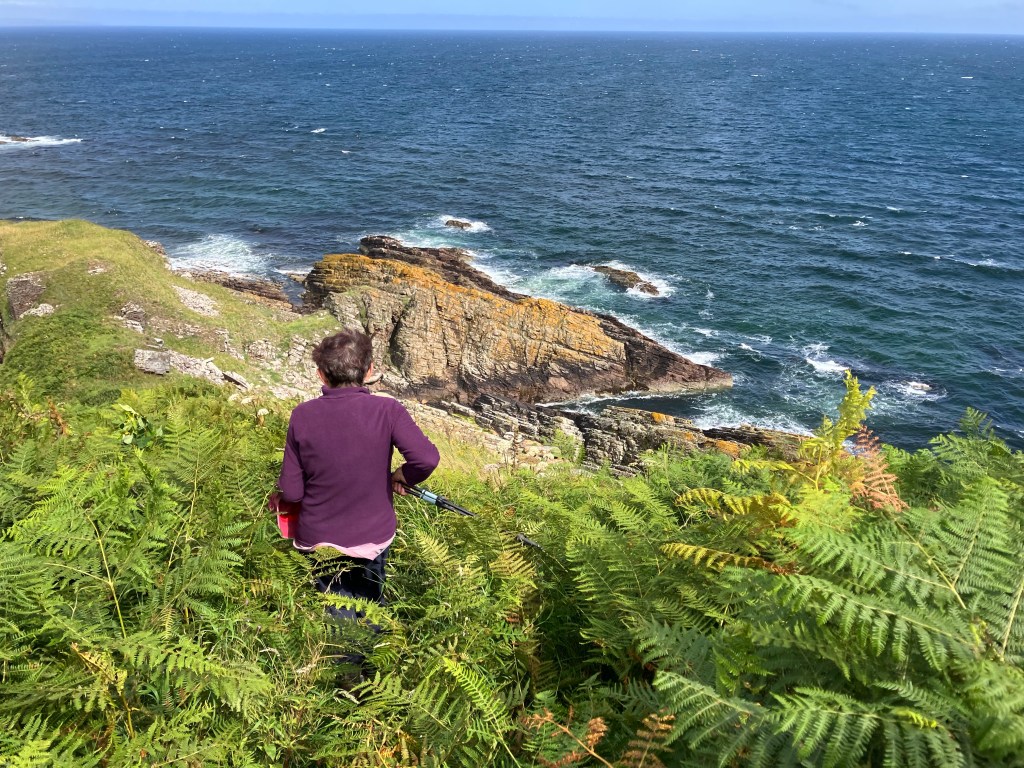
Today’s walk along the coast was different from the previous day by about two hundred feet, and instead of Carol complaining about the pebbles it was me complaining about the hills. Some of the most challenging conditions so far, through jungle, bog and deep ravines with steep ascents and descents on narrow side slopes, all making this old man very weary. Carol on the other hand has resorted to drugs and has a secret stash of Kendal Mintcake giving her unnatural vigour and speed. About half way through our walk we came across the remnants of an old settlement called Badbea (pronounced Bad Bay) established by displaced families during the terrible time of the ‘clearances’ between the mid 18th and mid 19th centuries. This was a time when land owners calculated that crofters’ rent on their estates was less than that which sheep could bring in. The displaced were forced into areas like Badbea, almost impossible to farm, and exposed to treacherous coastal weather. The fragile autonomous way of life had been broken into a dichotomous one of them and us. When people become of less value than sheep, mutual dependence evaporates. Today the sheep are computer systems, robots and AI. Coal miners, oil workers and even farmers are just a few of those communities that are being demonised and displaced today by ‘them’. New technology has no need of ‘us’ and our purpose is becoming less clear and relevant as each year passes. Yes, I’m grumpy but I’m sitting on stones, the remains of an old dwelling shouting it’s history at me, while looking out to a horizon where clouds are gathering over the North Sea. Under them a massive bank of wind turbines are facing down a solitary Oil Drilling Rig, an army of shining blades whirling over the old dragon who’s stinking fiery breath still trails from its nostrils. The Rig is part of our history that gave ordinary people warm homes, travel on rubber wheels across tarmac roads, freedom to cross continents by air, sea and rail. It gave ordinary people extraordinary opportunities in a true revolution that spread world wide, providing employment that inspired imaginations. We now dismiss it as the evil monster that’s to blame for destroying planet earth. The brain that controls the North Sea Wind Turbines is a ‘system’ property of Siemens Energy. I am not against renewables and technology, but any fool can see where the world of supply and demand is heading. There is a wildness up here on the cliffs along this stretch of Scotland’s coast, which on a warm calm day has a terrible beauty, like a sleeping lion. People have paid with their lives when it has stirred both up here on the rugged landscape and in the sea below which it overlooks. It is a wonderful path through a history of unimaginable geology, presently a home to hardy flora and graceful sea birds gliding on out-stretched wings along its fringes. It’s all there to see by those that wander here but less apparent are the natural struggles life has to endure to survive in this part of the world. The threads of past lives hidden in the weft and weave of human occupation within it tells a similar story both beautiful and tragic. There is a poem by William Wordsworth called ‘Lines Written in early Spring’, penned at the same time the Badbea families were struggling to build their homes and survive, where he masterfully links the human soul (condition) with nature. Today was a confusion of pathos and deep respect for nature and the human spirit at it’s extremities. https://www.poetryfoundation.org/poems/51001/lines-written-in-early-spring

 WALKING WITH GRAMPY
Leave a comment